
Bombay Street Food at Home: Vada Pav, Pav Bhaji and Bhel Puri
There is nothing quite like the sensory overload of a Mumbai street corner. The air is thick with the hiss of hot oil, the rhythmic clatter of a tawa, and the sharp, citrusy scent of fresh coriander. We have spent years chasing that specific chaos, trying to bottle the joy of a late-night snack eaten standing up, elbow-to-elbow with strangers. While we love a traditional British curry house, there is a whole other side to Indian food that happens on the pavement, not in a dining room. That is why we believe Vada Pav, Pav Bhaji, and Bhel Puri deserve a permanent spot in your UK kitchen. They are fast, they are messy, and they are the ultimate comfort food.
Why Bombay Street Food Belongs in a British Kitchen
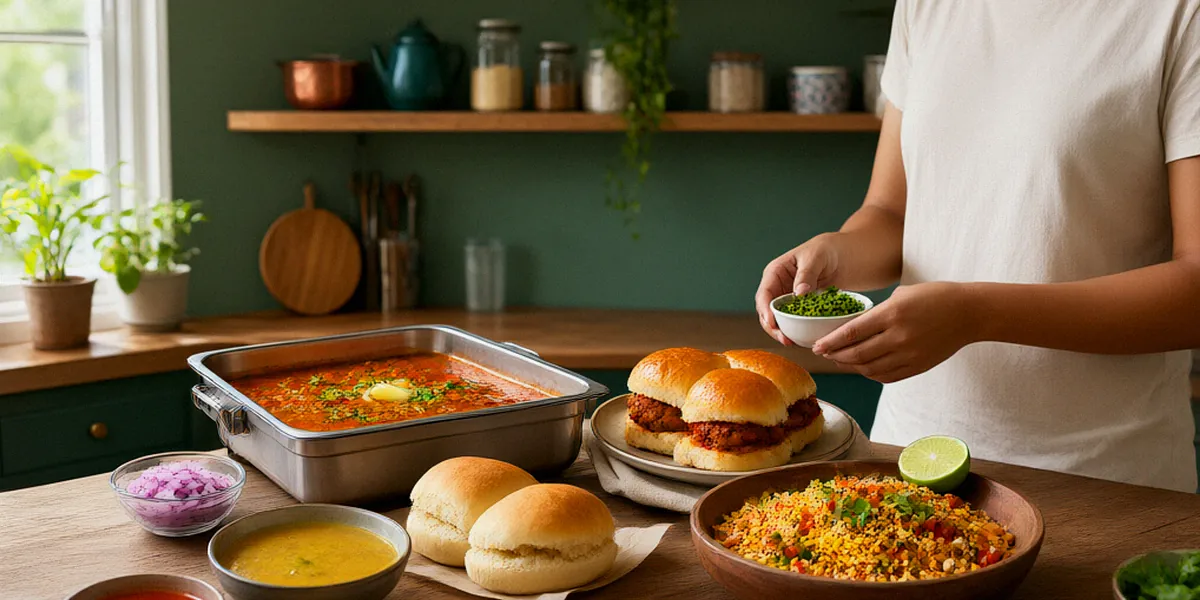
We often get asked if cooking these snacks at home is worth the effort when we have such good takeaways nearby. The answer is always yes. The UK’s palate has evolved beyond Chicken Tikka Masala; we are now deeply invested in the real, regional flavours of India. These three dishes fit perfectly into our busy lives because they rely on accessible ingredients. You do not need a pantry full of obscure spices. Potatoes, bread rolls, and tamarind are readily available in UK supermarkets, and if you want the authentic brands, a quick trip to an Indian grocer like Patel Brothers or Quality Foods will sort you out.
The UK’s Love Affair with Indian Snacks
Our relationship with Indian food is unique. We have the curry house culture, born out of the 1960s, but we also have a growing obsession with street food. Dishes like Vada Pav are essentially the Indian answer to a burger, making them instantly relatable to a British audience. We are seeing more and more people moving away from heavy, cream-laden curries in favour of tangy, spicy, and textural snacks. These dishes are vegetarian by default, making them budget-friendly and perfect for meat-free Mondays.
What You Need in Your Cupboard
Before you start, we recommend stocking up on the basics. You do not need a professional kitchen, but a few key items will make the process smoother.
- Asafoetida (Hing): Essential for that authentic savoury note in the potato filling.
- Curry Leaves: Fresh is best, but dried works in a pinch.
- Tamarind Paste: Look for the concentrated blocks or ready-made paste in jars.
- Mustard Seeds: For the tempering (tadka) that starts most of these recipes.
- Puffed Rice (Mamra): Check the world food aisles in Tesco or Asda.
Vada Pav: Mumbai’s Iconic Potato Burger
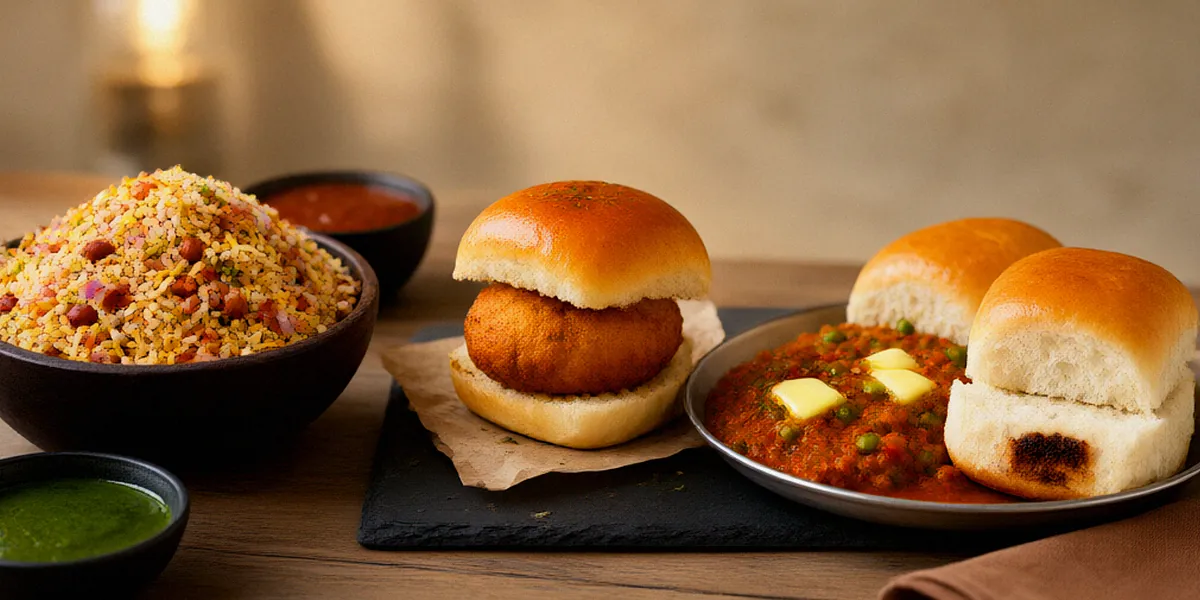
Vada Pav is the lifeline of Mumbai. It is a spiced potato fritter (vada) sandwiched inside a soft bread roll (pav), usually slathered with dry garlic chutney and green chillies. We love it because it is carb-on-carb heaven. To get this right at home, you need to focus on two things: the texture of the potato and the temperature of your oil. We aim for a hot oil temperature of around 180°C. If the oil is too cold, the vada will soak up grease; too hot, and it will burn before the inside is hot. For the bread, skip the fancy sourdough. A sturdy white bap from a UK bakery is exactly what you need.
Making the Batata Vada
Start by boiling and mashing potatoes. In a pan, heat some oil and add mustard seeds, curry leaves, ginger, garlic, and green chillies. Add turmeric and asafoetida, then mix this tempering into the potatoes. Shape the mash into balls. The coating is a simple gram flour (besan) batter seasoned with salt and chilli powder. Dip the balls and deep fry until golden. The crust should be crisp, giving way to a soft, spicy centre.
The Garlic Chutney and Assembly
The dry garlic chutney is the secret weapon. It is made from garlic, dried red chillies, coconut, and peanuts, ground into a coarse powder. To assemble, slice your bap (pav) almost all the way through. Spread a layer of green chutney on one side and the dry garlic chutney on the other. Place the hot vada inside and press gently. The heat from the vada will warm the bread and release the aromas of the chutneys.
Pav Bhaji: The Butter-Loaded Crowd-Pleaser
If there is one dish that defines Mumbai comfort, it is Pav Bhaji. It is a thick, spicy mash of vegetables served with soft bread rolls toasted in butter. The key to authentic Pav Bhaji is, without a doubt, the butter. While you can use any butter, Amul butter is widely available in UK Indian grocers and is key to authentic pav bhaji. It has a distinct, slightly salty flavour that defines the dish. You also need a tawa or a heavy flat pan to cook the bhaji; a standard frying pan is often too deep and won’t allow the water to evaporate quickly enough.
Cooking the Bhaji on a Tawa
We start by boiling potatoes, peas, and cauliflower until soft. On the tawa, melt a generous knob of butter and sauté onions, ginger, and garlic. Add tomatoes and cook until they break down. This is where the magic happens: add a good quality Pav Bhaji masala. We often reach for UK brands like East End Foods for spices because they are reliable and widely available. Mash the boiled vegetables into the tomato mixture using a potato masher, adding water to reach a thick, gravy-like consistency. Let it simmer until the butter separates slightly from the mash.
Toasting the Pav and Serving
Slice your pav rolls horizontally. On a separate part of the tawa (or a frying pan), melt more butter. Add a pinch of cumin and coriander. Toast the rolls face down until they are golden and crisp. Serve the bhaji in a bowl, topped with a cube of butter, and garnish with finely chopped raw onions, coriander, and a squeeze of lemon. The contrast between the hot, spicy mash and the crunchy onions is unbeatable.
Bhel Puri: The Ultimate Street-Side Snack
Bhel Puri is the lighter, crunchier side of Bombay street food. It is a salad of sorts, but made with puffed rice and crunchy noodles. It is all about texture and tang. The beauty of Bhel Puri is that it takes about five minutes to assemble. It is perfect for a summer evening in the garden or as a starter before a main meal. The challenge in the UK is often finding the right ingredients, but UK supermarkets like Tesco and Asda stock puffed rice and sev in their world food aisles, so you don’t have to travel far.
Building the Base: Puffed Rice and Sev
We use plain puffed rice (kurmura) and fine sev (gram flour noodles). You want to mix these together with finely chopped onions, tomatoes, and boiled potatoes. The ratio is up to you, but we like it heavy on the crunch. Add fresh coriander and a handful of roasted peanuts for extra bite. The key is to mix everything just before serving so the puffed rice doesn’t go soggy.
The Three Chutneys
The flavour profile comes from three chutneys: sweet, spicy, and tangy.
- Sweet Chutney: Made from dates and tamarind. This provides the dark, sticky sweetness.
- Green Chutney: Made from coriander, mint, and green chillies.
- Garlic Chutney: A spicy, fiery paste to wake up the taste buds.
If you are cooking for British palates that aren’t used to high heat, we suggest going easy on the green and garlic chutneys and adding more of the sweet tamarind one. You can always serve the spicy chutneys on the side for people to add themselves.
Masala Chai: The Perfect Accompaniment
You cannot eat street food without a cup of Masala Chai. It is the fuel that keeps the streets of Mumbai moving. In the UK, we are a nation of tea drinkers, so this should feel familiar, but the spices add a whole new dimension. You can use a standard black tea bag as a base—UK tea brands like PG Tips work well—but for the best results, use loose-leaf Assam tea. You can find excellent loose-leaf Assam from UK Indian grocers or online specialists.
Brewing the Perfect Cup
In a saucepan, combine water, Assam tea, and crushed spices. We use green cardamom, cloves, cinnamon, and fresh ginger. Bring this to a boil. Once the water is infused and dark, add milk and sugar. Let it simmer and rise up in the pan a few times. This aerates the tea and makes it frothy. Strain it into cups. It should be strong, sweet, and spicy.
Spice Blends to Try
You can buy pre-made chai masala, but making your own allows you to control the flavour. We like to add a pinch of black pepper for a little kick. Some people add fennel seeds for a sweeter, liquorice-like note. Experiment with your blend until you find your perfect cup.
Sourcing Indian Spices and Ingredients in the UK
We are lucky in the UK to have incredible access to Indian ingredients. You do not need to rely solely on the ‘ethnic’ aisle of a big supermarket. We recommend exploring local markets. Birmingham’s Balti Triangle and Leicester’s Golden Mile are hubs for Indian ingredients, offering everything from fresh produce to massive sacks of basmati rice. If you can’t get to a physical store, the internet is your friend. Spice Kitchen UK is a popular online retailer for fresh Indian spices, often delivering whole spices that are far more aromatic than the dusty jars in supermarkets.
Online and High-Street Retailers
For pantry staples, we use a mix of sources. For convenience, Tesco and Asda are fine for puffed rice and sev. For specific brands like Amul butter or East End spices, a local Indian grocer is best. If you live in a rural area, online retailers like Spice Kitchen UK or even Amazon can fill the gaps. We also suggest checking out the role of curry house suppliers; many of them sell to the public, offering bulk sizes of spices that are great value.
Building a Street Food Spice Kit
To make these recipes regularly, we suggest keeping a dedicated ‘street food’ spice box. It should include:
- Mustard seeds
- Cumin seeds
- Turmeric powder
- Red chilli powder (Kashmiri chilli is great for colour without too much heat)
- Garam Masala
- Pav Bhaji Masala
- Chaat Masala
- Asafoetida (Hing)
FAQ
Can I make Vada Pav without a deep fryer?
Yes, you can. We often use a deep, heavy-bottomed saucepan or a wok filled with oil. The key is to maintain the temperature at around 180°C. If you don’t have a thermometer, drop a small piece of batter in; if it rises to the surface immediately and sizzles, the oil is ready.
Where can I buy Amul butter in the UK?
Amul butter is a staple in most Indian grocery stores across the UK, such as Patel Brothers or Quality Foods. You can also find it in the world food section of some larger Tesco or Asda stores, though stock varies by location.
Is Pav Bhaji very spicy?
It can be, but you control the heat. The spiciness usually comes from the Pav Bhaji masala and the amount of red chilli powder you add. If you are cooking for children or those with low spice tolerance, use a mild masala and serve the raw onions and lemon on the side.
What is the best bread to use for Pav?
You want a soft, white bread roll. A standard British bap or a soft white roll from a supermarket bakery works perfectly. Avoid crusty breads like baguettes or sourdough, as they are too hard for these soft snacks.
Can I prepare the chutneys in advance?
Absolutely. The dry garlic chutney and the sweet tamarind chutney keep well in the fridge for up to a week. The green chutney is best fresh, but it will last 2-3 days in an airtight container. Having chutneys ready makes assembling Bhel Puri or Vada Pav much faster.
We hope this guide inspires you to bring a little bit of Bombay chaos into your kitchen. Whether you are deep-frying vadas or mixing up a bowl of bhel, the key is to embrace the mess and enjoy the process. These recipes are about joy, sharing, and bold flavours. We would love to see your results, so be sure to share your photos and tips with our community online.