
Building a Spice Cupboard: Essential Indian Spices for a UK Kitchen
You’re standing in the spice aisle of a Tesco Extra on a Tuesday evening, staring at a wall of jars. Turmeric, cumin, something called asafoetida, three different types of chilli powder, and a garam masala that costs £1.20 next to one that costs £4.50. You came in for one thing and now you’re wondering whether you actually know anything about Indian cooking at all. We’ve been there. The truth is, you don’t need thirty jars to cook brilliant Indian food at home. You need about ten, chosen well, stored properly, and used with a bit of confidence. That’s what this guide is about.
Why Every UK Kitchen Needs an Indian Spice Cupboard
Indian food isn’t a niche interest in Britain anymore — it’s part of how we eat. The UK’s love for curry house culture dates back to the 1970s, when restaurants serving chicken tikka masala, rogan josh and vindaloo became fixtures on nearly every high street. That restaurant tradition has now fed directly into our home kitchens. Supermarkets stock own-brand garam masala next to the oregano, and online specialists will post single-origin cumin straight to your door. A core spice cupboard lets you cook across that whole spectrum, from a Friday night curry house classic to the chaat and vada pav you’d find on a Bombay street corner.
From British Curry House to Home Kitchen
The dishes most of us grew up ordering — tikka masala, korma, bhuna, dansak — rely on a surprisingly small palette of spices. Cumin, coriander, turmeric, garam masala, chilli and fenugreek will get you most of the way there. Once those are in the cupboard, you can move on to street food: sprinkle chaat masala over boiled potatoes, fry mustard seeds for a Bombay-style potato dish, or whisk cardamom and ginger into a masala chai. The same ten jars do both jobs.
Cost Savings and Flavour Control
Buying spices individually is dramatically cheaper than buying ready-made curry sauces, and it gives you control over salt, heat and sweetness. A 100g bag of ground cumin from an Asian grocer costs a fraction of a jar of the same weight in a supermarket, and it will last months. You also avoid the sugar and thickeners that many jarred sauces rely on. Cooking from whole and ground spices means you can dial the heat up or down, cut the salt, and adjust a dish to suit your own table rather than a factory’s idea of it.
The Essential Indian Spices: Our Top 10
These are the ten we’d start with. You’ll find most of them in any large UK supermarket, and all of them in a decent Asian grocery. Bart Spices is a popular UK brand available in supermarkets, and East End Foods is a leading UK supplier of Indian spices and lentils — both are reliable starting points if you’re shopping in a hurry.
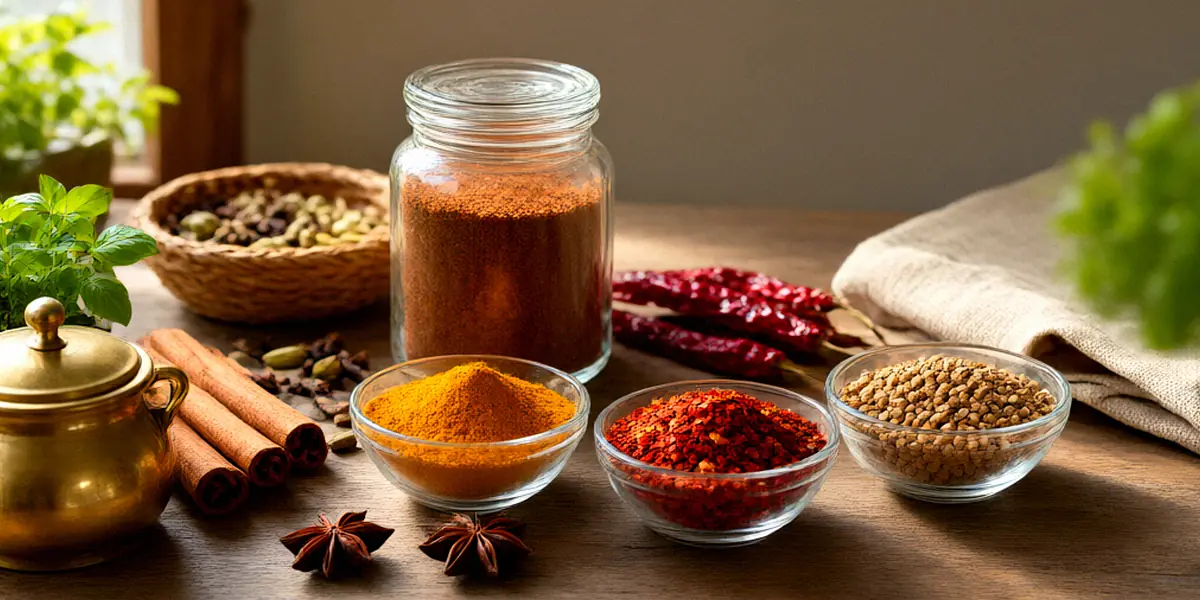
- Cumin (jeera) — earthy, warm, the backbone of most savoury Indian cooking. Buy whole seeds and grind as needed.
- Coriander (dhania) — citrusy and mild. Ground coriander thickens curries and balances cumin’s intensity.
- Turmeric (haldi) — earthy, slightly bitter, and the source of that golden colour. A little goes a long way.
- Garam masala — a warming blend, usually added late in cooking rather than at the start.
- Chilli powder — use Kashmiri for colour and mild heat, or a hotter variety if you like more punch.
- Mustard seeds (rai) — small black seeds that pop in hot oil and add a nutty bite to dals and vegetable dishes.
- Fenugreek (methi) — slightly bitter, maple-scented. Essential in many curry house gravies.
- Cardamom — green pods for savoury and sweet dishes, black pods for richer meat curries.
- Cloves — intensely aromatic. Two or three are enough in a pot of rice or a biryani.
- Cinnamon — use true cinnamon (cassia is harsher) in garam masala blends and chai.
Whole vs Ground: What We Recommend
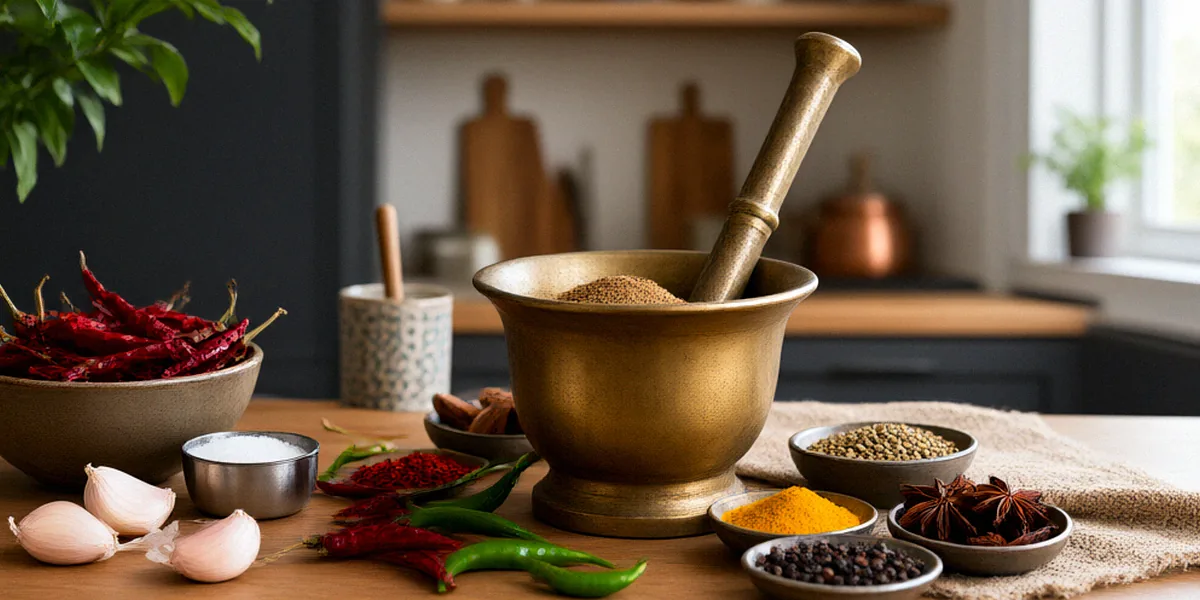
Whole spices keep their aroma far longer than ground ones, so our rule is simple: buy whole where you can, grind in small batches, and only buy ground for the spices you use constantly. Cumin, coriander, cardamom and cloves are all worth buying whole. Turmeric is almost always sold ground, and that’s fine. A cheap electric coffee grinder or a pestle and mortar will pay for itself within a month.
Regional Blends: Garam Masala and Curry Powder
Garam masala is not one fixed recipe. Every family, region and brand makes it differently — some lean heavy on cardamom and cinnamon, others add black pepper, nutmeg or bay. Curry powder, by contrast, is a British invention, created to approximate Indian flavours for a domestic market. It has its place in dishes like kedgeree, but for most Indian cooking we’d reach for garam masala and build the rest from individual spices.
Where to Buy Indian Spices in the UK
You have more options than you might think, and the price difference between them can be startling.
Supermarket vs Asian Grocery Stores
Tesco, Sainsbury’s, Asda and Morrisons all stock a decent basic range, and Lidl’s world foods aisle is surprisingly useful for larger bags of cumin, coriander and chilli. Asian grocers — whether a dedicated shop or the world foods section of a larger supermarket — will typically sell the same spices in 100g, 200g or even 500g bags for the price of a small supermarket jar. If you cook Indian food more than once a fortnight, the economics strongly favour the Asian grocery. Quality is usually comparable, and often better, because turnover is higher.
Online Spice Retailers We Trust
For single-origin spices, freshly ground blends and harder-to-find items, online is hard to beat. Spice Kitchen and The Spicery both offer well-curated Indian ranges with clear provenance. East End Foods sells directly through many retailers and is a dependable name for bulk lentils and spices. If you want a specific regional garam masala or a particular Kashmiri chilli, online is usually the only realistic route.
Storing Your Spices for Maximum Freshness
Spices don’t really go off in a food-safety sense, but they do lose their punch. Heat, light, air and moisture are the enemies, and the UK’s damp climate makes the moisture point especially relevant. A cupboard above the hob is the worst place you can keep them — steam and heat will flatten a jar of cumin within weeks.
Containers and Labels
Decant into small airtight containers and keep them in a cool, dark cupboard away from the cooker. Kilner jars are a common UK brand for airtight storage and work well for whole spices, though for ground spices we prefer smaller jars so you’re not opening a large volume of air every time. Label everything with the spice name and the date you bought or ground it. If you’re blending your own garam masala, note the ratio too — you’ll thank yourself later.
Shelf Life and When to Replace
As a rough guide: whole spices keep for two to three years, ground spices for six to twelve months, and pre-mixed blends for around six months. The real test is your nose. Crush a little between your fingers — if it smells flat or dusty rather than fragrant, replace it. Don’t bulk-buy ground spices just because they’re cheap; a 500g bag of ground coriander will lose its character long before you finish it.
Building Flavour: How to Use Your Spice Cupboard
Having the spices is one thing. Knowing what to do with them is where the cooking actually happens.
Tempering and Blooming
Tempering — tadka in Hindi — means heating whole spices in oil or ghee until they sizzle and release their aroma, then pouring that flavoured oil over a finished dish or using it as the base for a curry. Mustard seeds, cumin seeds, curry leaves and dried chillies are the classic candidates. Blooming ground spices works on the same principle: add them to hot oil early in cooking rather than at the end, and stir for thirty seconds until the raw smell disappears. This single habit will improve your curries more than any new ingredient.
Everyday Cooking: From Curry to Chai
Start with a chicken tikka masala: bloom cumin, coriander, turmeric and garam masala in oil, add onion, ginger and garlic, then tomato and yoghurt. Once you’re comfortable, try a Bombay-style potato dish with mustard seeds and turmeric, or a simple dal finished with a cumin and garlic tadka. And don’t overlook drinks — masala chai is a spiced tea blend that has gained popularity in UK coffee shops, and it’s easy to make at home with cardamom, cloves, cinnamon, ginger and black tea. It’s a good way to use up small quantities of whole spices before they go stale.
FAQ
How many spices do I really need to start cooking Indian food at home?
Ten will cover the vast majority of everyday dishes: cumin, coriander, turmeric, garam masala, chilli powder, mustard seeds, fenugreek, cardamom, cloves and cinnamon. Add asafoetida, curry leaves and chaat masala later once you’re cooking regularly.
Is it cheaper to buy Indian spices from an Asian grocer or a supermarket?
Almost always the Asian grocer, especially for larger quantities. You’ll often pay the same for 200g as you would for 40g in a supermarket jar. Supermarkets are fine for convenience and small top-ups.
How do I know when a spice has lost its flavour?
Smell it. Crush a pinch between your fingers — if it’s fragrant and sharp, it’s fine. If it smells like dust or cardboard, replace it. Ground spices typically last six to twelve months; whole spices two to three years.
Can I make my own garam masala at home?
Yes, and we’d encourage it. Toast whole cumin, coriander, cardamom, cloves, cinnamon and black pepper in a dry pan until aromatic, cool, then grind. Store in a small airtight jar and use within about three months for the best flavour.
What’s the difference between garam masala and curry powder?
Garam masala is an Indian blend, usually added near the end of cooking for aroma. Curry powder is a British invention designed to approximate Indian flavours and is typically used at the start. They aren’t interchangeable.
A well-stocked spice cupboard isn’t about owning everything — it’s an invitation to experiment. Start with five or six of the essentials above, cook with them often, and let your collection grow as your confidence does. Whether you’re recreating a 1970s curry house favourite or chasing the flavour of Bombay street food, the jars on your shelf are the beginning, not the end, of the story.