
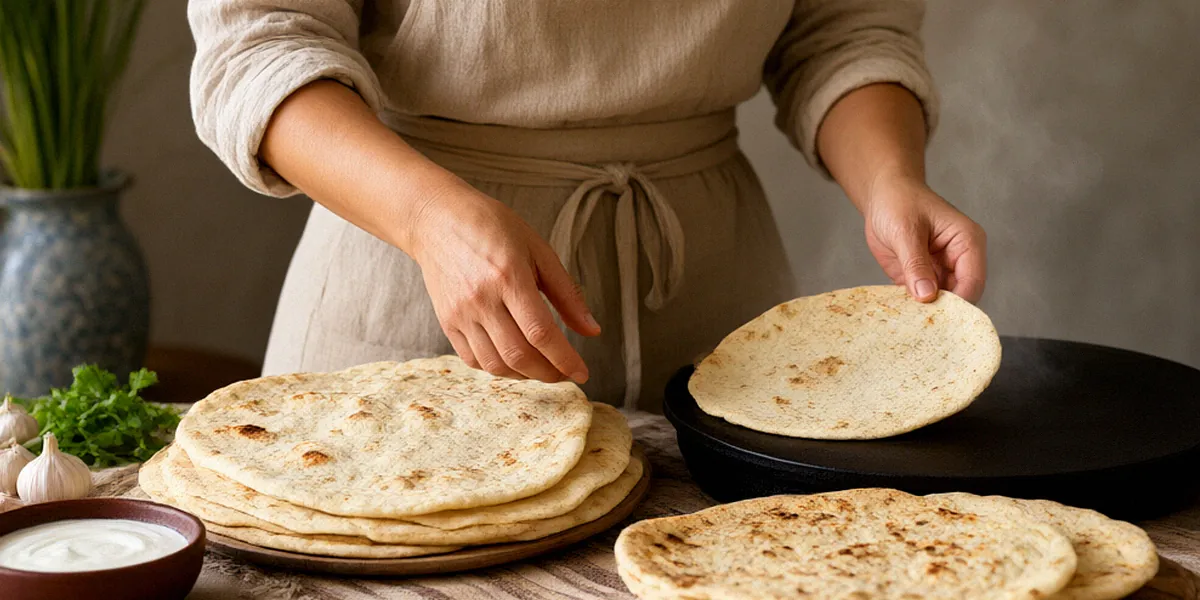
Making Naan and Roti at Home Without a Tandoor
Every curry night deserves proper bread, and yet the tandoor remains stubbornly out of reach for most of us in the UK. A real tandoor is a clay oven that hits temperatures your kitchen oven simply cannot match, which is why restaurant naan arrives blistered and smoky while homemade versions often turn out pale and bready. The good news is that you do not need a tandoor, a specialist clay pot, or a restaurant-grade extraction fan to get close. With the right flour, a screaming-hot cast-iron pan, and a few tricks we have picked up from British Asian home cooks, you can produce naan and roti that genuinely rival what comes out of your local curry house.
Why Tandoor Breads Taste Different (and How to Fake It)

The tandoor’s magic comes down to two things: extreme dry heat and direct contact with a scorching clay wall. A traditional tandoor reaches around 480°C, while UK ovens typically max out at 250°C. That gap explains everything—the fast rise, the leopard-spotted char, the slightly smoky finish. Since we cannot replicate 480°C at home, we work around it by cooking on surfaces that get far hotter than oven air ever will.
The Role of High Heat and Char
When dough hits a surface above 250°C, the moisture at the surface flashes into steam almost instantly. That steam puffs the dough from the inside and creates the blistered, slightly bitter char that defines a proper naan. Without that contact heat, your bread bakes rather than blisters, and you end up with something closer to a soft roll. The goal at home is therefore simple: get your cooking surface as hot as your hob allows, and keep the dough in contact with it long enough to colour before it dries out.
Best Home Equipment for Naan and Roti
You do not need much, but the right pan makes a real difference. Here is what we reach for:
- Cast-iron skillet — holds heat beautifully and gives the deepest char. Our first choice for naan.
- Heavy frying pan with a lid — the lid traps steam, mimicking the tandoor’s moist, intense environment.
- Pizza stone or baking steel — excellent if you want to finish naan under a hot grill, though it needs a long preheat.
- Griddle or tawa — flat, dry, and ideal for roti, especially the thin steel tawas sold in South Asian grocers.
- Gas hob — essential for the flame-puffing technique we use on roti.
Our Go-To Naan Recipe for UK Kitchens
This is the dough we make most often. It is forgiving, needs no special equipment, and works reliably in a standard British kitchen. The key is using strong white bread flour rather than plain flour—UK plain flour simply lacks the protein needed for that characteristic chew.
Ingredients and Why They Matter
- 400g Allinson strong white bread flour (or an equivalent high-protein bread flour)
- 1 tsp fast-action yeast
- 1 tsp caster sugar — feeds the yeast and helps browning
- 1 tsp fine salt
- 150g full-fat natural yogurt — Waitrose and Tesco both stock good own-brand versions; Greek-style works well
- 120–150ml warm water (adjust for your tap water—see troubleshooting below)
- 1 tbsp ghee or neutral oil, plus extra ghee for brushing
- Nigella seeds or chopped garlic and coriander, optional
The yogurt is doing real work here: its acidity tenderises the dough and its fat keeps the crumb soft. Ghee, widely available in Tesco and Waitrose as well as any Asian grocer, gives that unmistakable restaurant aroma when brushed on at the end.
Mixing, Kneading, and Proving
Combine the flour, yeast, sugar, and salt in a large bowl. Add the yogurt, oil, and most of the water, then mix to a shaggy dough. Knead for 8–10 minutes by hand or 5 minutes in a stand mixer until smooth and slightly tacky. Cover and prove for 1–1.5 hours, until roughly doubled. Divide into six balls, cover, and rest for 15 minutes before rolling.
Cooking Naan on the Hob
Heat your cast-iron skillet over the highest flame until it is genuinely smoking—give it a full 5–8 minutes. Roll a dough ball to about 3mm thick, then slap it onto the dry pan. Cover with a lid for 60–90 seconds; the trapped steam puffs the bread. Flip, cook uncovered for another 60 seconds until charred in spots, then brush with ghee. If you want extra smokiness, hold the naan briefly over a direct flame with tongs—the same trick we use for roti.
Roti: The Everyday Flatbread That Deserves Respect
Where naan is soft, enriched, and yeasted, roti is unleavened, wholewheat, and made from just two ingredients. It is the bread that appears on the table every night in countless British Asian households, and it deserves far more attention than it gets. Once you can make roti, you will make it constantly.
Choosing the Right Flour
Use finely milled chapati flour rather than standard wholemeal, which is too coarse and produces a dry, crumbly roti. We recommend Elephant Atta—it is widely stocked in Tesco, Sainsbury’s, and Asian grocers, and it rolls beautifully. If you cannot find it, a 50/50 mix of wholemeal and plain flour is a workable substitute.
Rolling and Cooking Roti
Mix 250g chapati flour with about 150ml warm water and a pinch of salt. Knead for 5 minutes until smooth, rest for 20 minutes, then divide into eight balls. Roll each thinly and evenly—thick edges will not puff. Heat a dry tawa or frying pan over medium-high heat and cook each roti for about 30 seconds per side, until small bubbles appear. Do not oil the pan.
The Flame-Puffing Trick
This is the step that transforms a flat, slightly dry roti into a soft, ballooned one. Using tongs, lift the part-cooked roti and hold it directly over a medium gas flame for a few seconds. It will puff up dramatically as the steam inside expands. This technique is completely standard in British Asian households, and once you have done it a couple of times it becomes second nature. Brush with a little ghee and stack under a clean tea towel to stay soft.
Troubleshooting: Why Your Flatbreads Might Fail
Most flatbread problems come down to two variables: dough hydration and pan temperature. Here is how we fix the usual suspects.
Dough Consistency Fixes
- Dough too dry or crumbly: add water a tablespoon at a time. UK tap water varies significantly in hardness—harder water in areas like London and the South East means you often need slightly more liquid than a recipe suggests.
- Dough too sticky: dust with a little flour, but sparingly. Over-flouring the rolling surface makes roti tough and dry.
- Naan not puffing: the dough is likely too thick or under-proved. Roll thinner and give it more proving time.
Heat and Timing Adjustments
If your naan sticks to the pan, the pan is not hot enough—wait longer before adding dough. If it burns before cooking through, your pan is too hot; drop the flame slightly. For roti, a pan that is too cool will produce pale, leathery bread, while one that is too hot will scorch the surface before the inside cooks. Medium-high is the sweet spot. Always preheat longer than feels necessary.
Serving and Storing Your Homemade Breads
Fresh bread is at its best within an hour of cooking, but these flatbreads keep well if you handle them properly.
Pairings for a British Curry Night
Naan is the natural partner for butter chicken, dal makhani, or a rich lamb rogan josh. Roti suits lighter sabzis, dry curries, and grilled meats, and it makes an excellent wrap for leftover tandoori chicken the next day. Add a pot of masala chai and you have a proper British curry night at home.
Reheating and Freezing Tips
- Refresh leftover naan in a toaster or under a hot grill for 30–60 seconds.
- Wrap breads in foil and keep at room temperature for up to a day.
- Freeze cooled flatbreads with baking paper between each one for up to a month. Reheat from frozen in a dry pan or toaster.
Making naan and roti at home without a tandoor is never going to be identical to a restaurant version, and that is fine. Embrace the imperfect char, enjoy the process, and remember that a slightly uneven, freshly made flatbread will beat anything from a supermarket packet every single time.
FAQ
Can I make naan without yogurt?
Yes, but the texture will be less tender. Substitute the yogurt with an equal weight of milk plus a teaspoon of lemon juice, and add an extra tablespoon of oil to keep the dough soft.
Why is my roti not puffing up?
Usually the dough is too dry or the roti is rolled too thick at the edges. Rest the dough longer, roll it thinner and more evenly, and make sure your pan is properly preheated before cooking.
What is the best flour for naan in the UK?
Strong white bread flour with a protein content around 12–13%, such as Allinson, gives the best chew. Standard UK plain flour does not have enough protein for a proper naan texture.
Can I cook naan in the oven instead of on the hob?
You can, but results are less reliable. Preheat a pizza stone or baking steel at your oven’s maximum temperature (around 250°C), then finish the naan under the grill for char. A hot cast-iron pan still gives the closest result.
How do I stop my naan from sticking to the pan?
Make sure the pan is genuinely hot before the dough goes in, and use a dry pan rather than oiling it. If the dough still sticks, your pan needs another few minutes of preheating.